
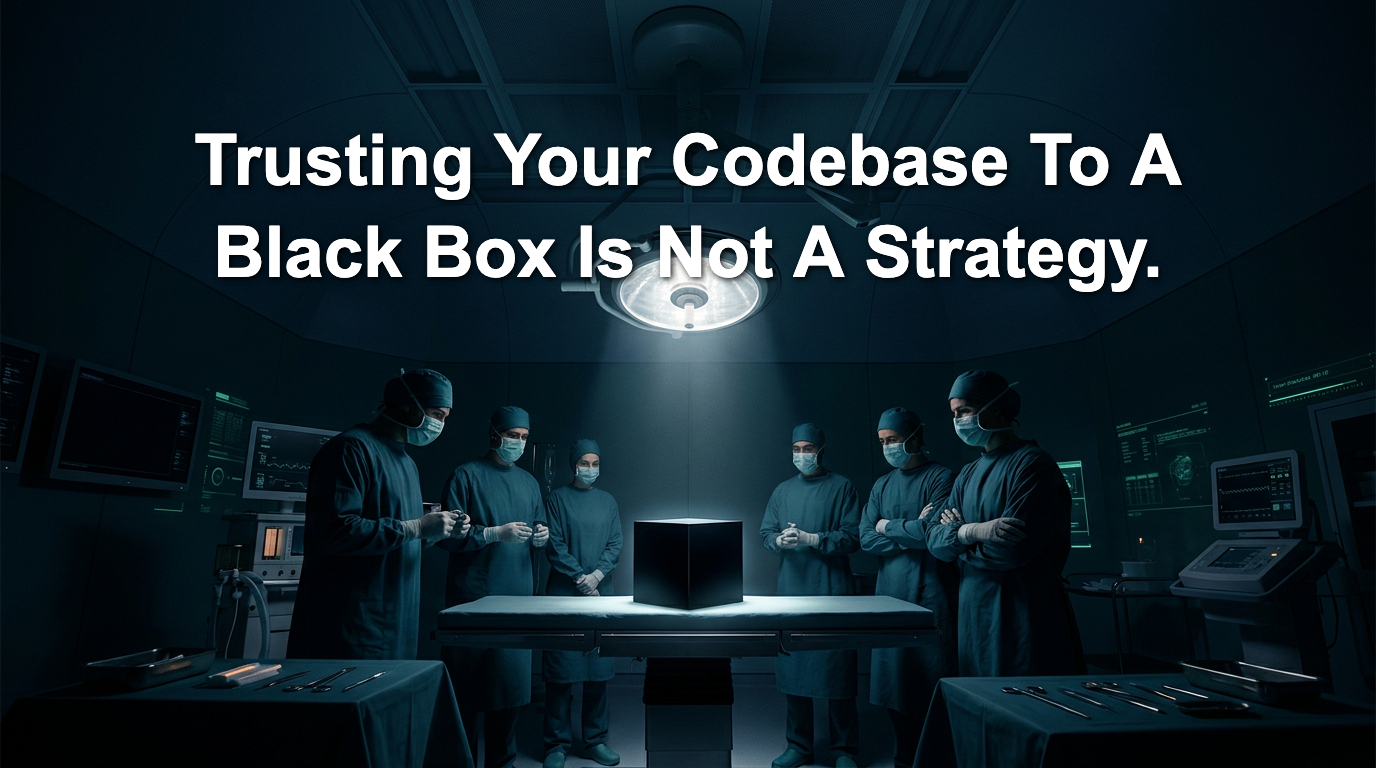
AI is fundamentally reshaping the software development landscape. The conversation has moved far beyond simple code completion; teams are now striving to build ‘lights out software factories’ where autonomous agents make changes on their own. The potential is immense, but so are the risks. As we rush to harness this power, a critical distinction is being ignored, one that separates a helpful assistant from a professional liability: the difference between a ‘black box’ and a transparent partner.
For many developers, the current generation of AI tools operates as an inscrutable black box. You provide a prompt, and it produces an output. The code might work, it might even be elegant, but the process behind its creation is a complete mystery. You cannot see the AI’s reasoning, the trade-offs it considered, or the assumptions it made. This is more than just a curiosity; for any serious engineering team, it is an unacceptable risk.
Professional software development is built on a foundation of predictability, accountability, and collaboration. Black box AI undermines all three.
When you cannot see the ‘why’ behind a change, you cannot truly trust it in a production environment. On an individual level, it is like copy-pasting a solution from an anonymous source without understanding its side effects or security vulnerabilities. But the danger scales. Over time, an unchecked AI can introduce a thousand subtle bad patterns, slowly degrading your codebase’s integrity and performance. When something inevitably goes wrong—either in a single catastrophic failure or a slow-burn performance issue—who is accountable? You cannot debug the AI’s thought process. You are left trying to reverse-engineer a mystery.
Furthermore, this model is fundamentally anti-collaborative. Code review, a cornerstone of team-based development, becomes nearly impossible. How can a teammate effectively review a block of AI-generated code if the original author, the AI, cannot explain its own work? It forces the developer who accepted the suggestion to take sole ownership of a solution they did not fully author or comprehend.
This is why we believe plan-driven execution is NON-NEGOTIABLE for professional AI-assisted development. The goal should not be to have an AI that simply does the work for you. The goal should be to have an AI that proposes a clear, understandable, and reviewable plan of action, just as a human team member would.
At RunWield, we have built our platform on this principle. Instead of forcing teams down the daunting path of building their own autonomous ‘software factory’ or handing them a mysterious block of code, RunWield provides a framework for controlled change. Our collaborative Plan Review Surface presents the AI’s suggestions not as a finished product, but as a proposal. This is not just a feature; it is a philosophical shift. The Plan Review Surface translates the AI’s intent into a series of discrete, human-readable steps. It shows you what it plans to do, which files it intends to modify, and what the expected outcome is BEFORE any code is ever written.
This approach brings transparency and control back to the developer. The AI’s proposed strategy becomes a shared, reviewable artifact. Your entire team can look at the plan, discuss the approach, suggest modifications, and grant approval. It transforms a solitary, high-risk interaction with a black box into a safe, collaborative, and strategic process. The developer is no longer a passive recipient of code; they are the architect, using the AI as a powerful tool to execute a well-understood strategy.
The allure of instant solutions is strong, but professional engineering demands discipline. By insisting on a plan-driven approach, we turn AI suggestions into a shared, reviewable strategy, ensuring that every change is deliberate, understood, and owned by the team. This is the difference between a magic trick and a sustainable engineering practice.
 Back to Wield Notes